5 minutes
NFC payments: What they are and why they matter for your business
The technology behind every tap, every wallet payment and every contactless card – explained for business owners.
A customer at your boutique taps her Apple Watch and walks out with her purchase. Down the street, a vendor at the farmers market accepts a Google Pay payment on his phone. At the café on the corner, a dozen transactions clear before a single card is inserted. Different businesses, different devices – the same underlying technology making it all possible.
That technology is NFC: near-field communication. It's the engine behind every tap-based payment your customers make, whether they're using a contactless card, a mobile wallet or a smartwatch. Understanding what NFC is – and what it isn't – helps you make smarter decisions about your payment setup and ensures you're ready for every customer who walks through your door.
One quick clarification before we dive in: NFC is a technology, not a product. Tap to Pay is one specific application of NFC – a software solution that turns a smartphone into a payment terminal. We'll cover that separately. This article is about the technology itself.
What are NFC payments?
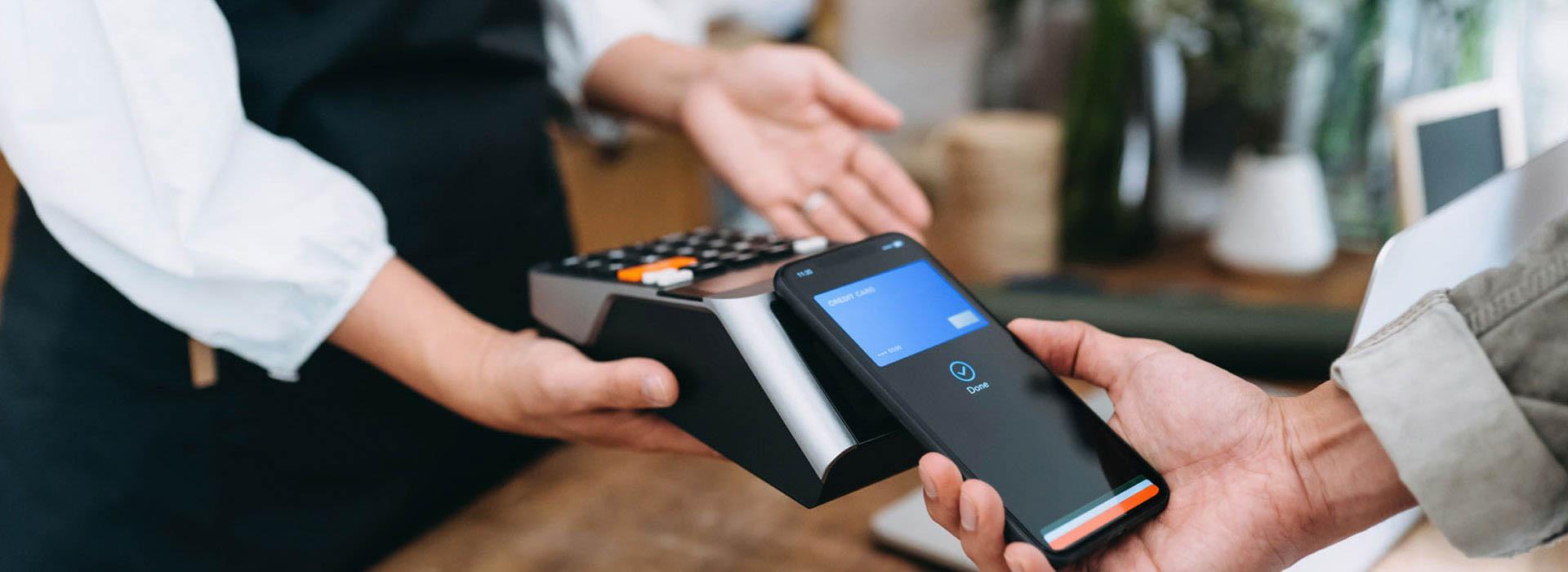
NFC payments are contactless transactions made by tapping an NFC-enabled device – such as a smartphone, smartwatch or contactless card – near an NFC-capable payment reader. The devices communicate wirelessly within a few centimeters, exchanging encrypted payment data in milliseconds without physical contact.
NFC stands for near-field communication: a short-range wireless technology that allows two NFC-enabled devices to exchange data when held within a few centimeters of each other. In payments, one device is the customer's (a phone, card or wearable) and the other is your payment reader.
What makes NFC the right technology for payments is the combination of speed, security and range. The signal only works at close range – typically 4 cm or less – which means it can't be intercepted from across a room. And each transaction uses a unique encrypted token rather than the customer's real card number, so even if data were somehow captured, it would be useless.
NFC isn't a payment method on its own. It's the communication layer that makes contactless payment methods possible. Think of it as the technology behind the tap.
What devices and payment methods use NFC?
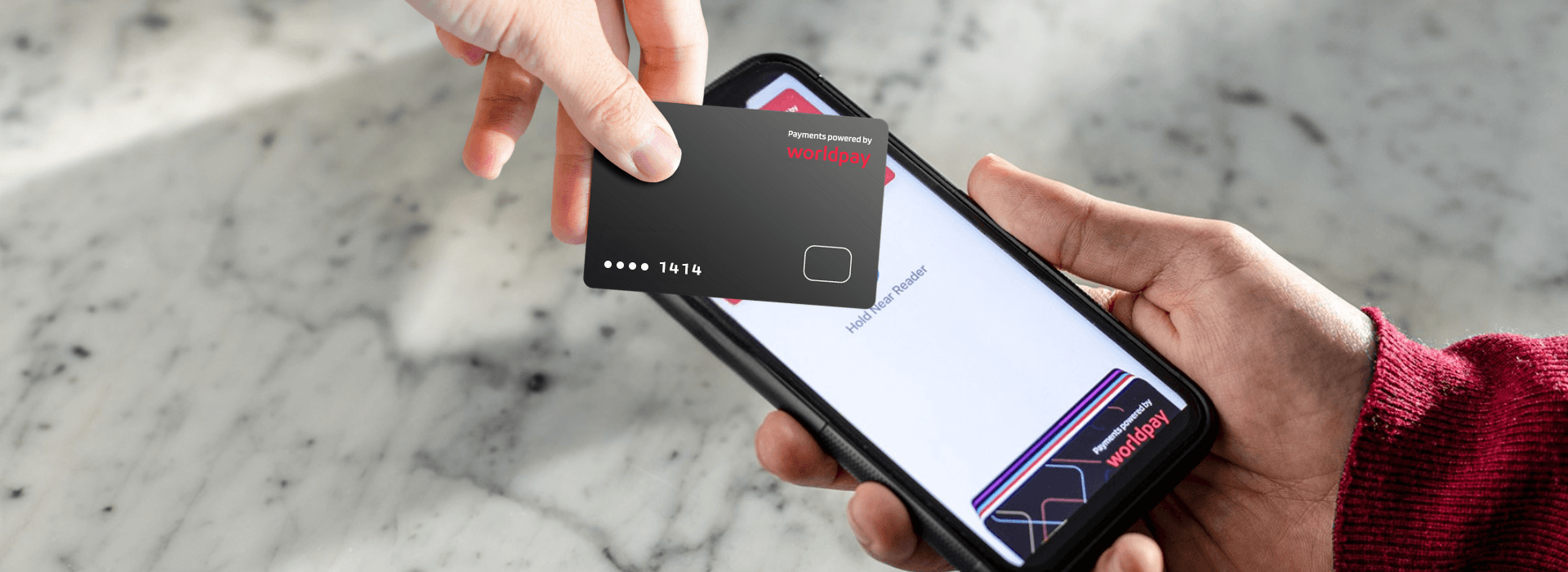
NFC payments can be made using contactless debit and credit cards, smartphones with mobile wallets (Apple Pay, Google Pay, Samsung Pay), smartwatches (Apple Watch, Garmin Pay, Fitbit Pay) and wearable payment devices like rings and bands. A single NFC-enabled reader at your counter accepts all of them.
This is the breadth of NFC that matters most for business owners, because it means one piece of equipment unlocks an enormous range of customer payment preferences:
Contactless cards
Most cards issued today are dual-interface: They have an EMV chip for dipping and an NFC antenna for tapping. Your customer can pay by tapping their Visa, Mastercard or American Express card directly on your reader – usually without entering a PIN, subject to UK contactless limits and security checks. More than 80% of cards globally are projected to support tap-to-pay by 2026.
Mobile wallets
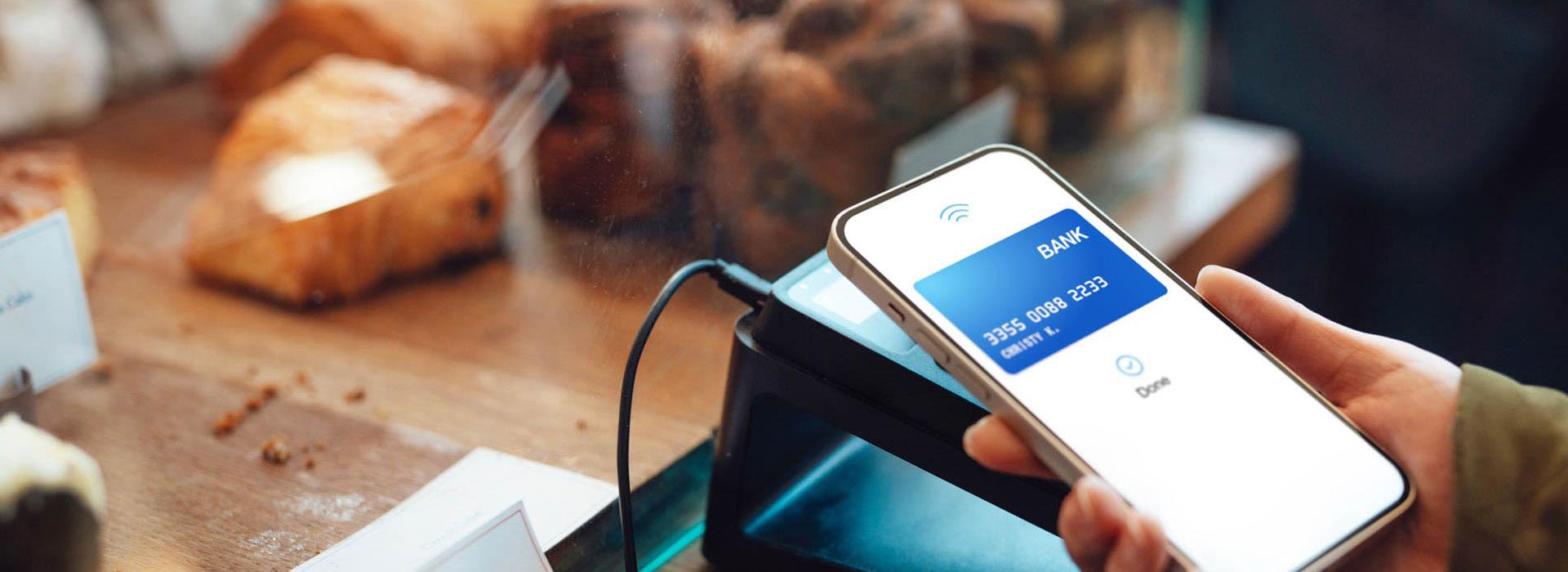
Apple Pay, Google Wallet (Google Pay) and Samsung Pay all use NFC to communicate with your reader when a customer pays with their phone. More than 94% of smartphones now ship with NFC capability, and mobile wallets are projected to reach 5.6 billion users globally by the end of 2025 – making this the fastest-growing payment channel in everyday retail.
Smartwatches and wearables
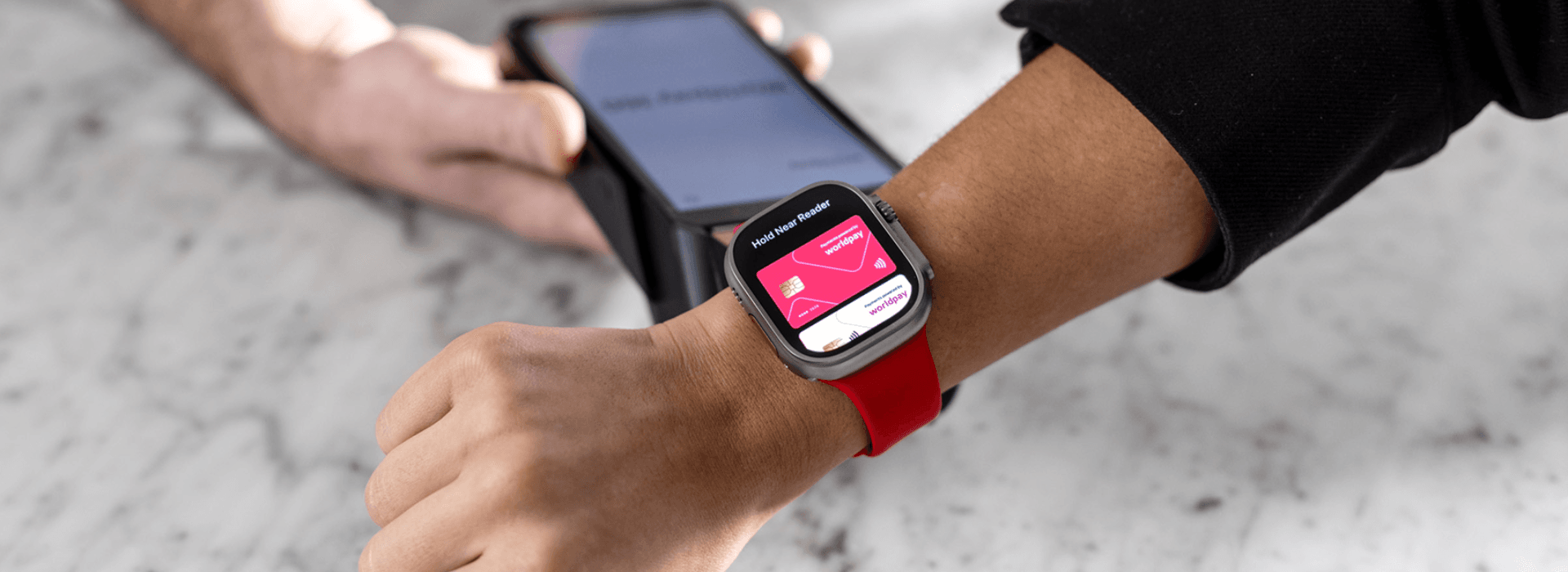
Apple Watch, Garmin Pay, Fitbit Pay and a growing range of payment rings and bands all use NFC to complete transactions. Wearable payments are the fastest-growing segment of contactless technology. For merchants, this is already happening at the checkout counter.
The key point: You don't need different readers for each payment type. One NFC-enabled terminal handles all of them. The customer decides how they pay – your job is simply to be ready.
How do NFC payments work?
When a customer holds an NFC-enabled device near a payment reader, the two devices exchange an encrypted, one-time-use payment token over a short-range wireless signal. This token authorizes the transaction without transmitting the customer's real card number. The process takes less than two seconds.
The full transaction happens in four steps:
- The customer holds their phone, card or wearable within a few centimeters of your NFC-enabled reader.
- The reader and device exchange a unique, encrypted payment token – not the real card number.
- The token is sent to the payment provider for authorization, using the same networks as any card payment.
- The transaction is approved and complete, typically in under two seconds.
The security mechanism at the heart of this is tokenisation. Instead of transmitting actual card data, the customer's device generates a single-use digital stand-in. Even if that token were intercepted – which is unlikely given NFC's limited range – it would be worthless. It can only be used once, for that specific transaction.
For mobile wallet payments, there's an additional layer: The customer has already authenticated themselves on their phone using Face ID, a fingerprint or a PIN before the payment reaches your reader. That's two security checkpoints before the transaction completes.
Why are NFC payments growing so fast?
NFC payment adoption has accelerated due to consumer demand for speed and convenience, the near-universal availability of NFC-capable smartphones and cards, and a permanent shift in checkout expectations following the pandemic.
The numbers tell the story clearly. Contactless payments now account for more than 75% of all transactions on Mastercard's global network. NFC adoption in North America grew 37.6% in 2025 alone. This isn't a trend building toward a peak – it's a shift that has already happened.
Younger consumers led the charge. Gen Z shoppers are now just as likely to pay with a digital wallet as with a physical card – 36% versus 34%, according to a 2025 Visa and Morning Consult report. But NFC adoption has spread well beyond younger demographics: 65% of baby boomers report having tried mobile payments by 2025. The population of contactless payment users now spans every age group.
The device side has caught up too. Most smartphones now ship with NFC built in. Most cards issued today support contactless. The infrastructure – on both the consumer side and the merchant side – is there. The businesses that benefit most are the ones that recognize the shift has already happened and position themselves accordingly.
What does accepting NFC payments mean for your business?
Accepting NFC payments means faster checkouts, broader customer payment acceptance, lower fraud exposure through tokenization and the ability to integrate loyalty programs directly into the payment experience. For most businesses, NFC capability is already present in their equipment – it may simply need to be activated.
Here's what NFC acceptance looks like in practice across the five areas that matter most:
1. Speed
NFC transactions complete up to 60% faster than chip-based payments. For a café at morning rush, a food truck at lunch or a boutique on a Saturday afternoon, those seconds compound into real operational capacity – more customers served, shorter lines, fewer people leaving before they reach the till.
2. Customer expectations
Customers increasingly expect to pay the way they want to pay. Fifty-one percent of consumers say they would stop shopping at a merchant that doesn't accept digital wallets. That's not a fringe preference – it's a majority of potential customers making a conscious purchase decision based on your payment options.
3. Security
Every NFC transaction is protected by tokenization – no real card data is ever transmitted to or stored by your terminal. This means your business is shielded from the kind of data exposure that comes with older card payment methods. Tokenization has reduced fraud rates for NFC payments by 34% in 2025, translating directly into fewer chargebacks and disputes.
4. Loyalty and customer engagement
NFC-enabled payment systems integrate naturally with digital loyalty programs, letting customers earn points or redeem offers with the same tap they use to pay – no separate app, no loyalty card to fumble for. Eighty-three percent of small businesses that adopted contactless technology in 2025 reported higher customer satisfaction – a strong signal that the checkout experience is a meaningful part of the customer relationship.
5. Hardware: probably less work than you think
For many businesses, accepting NFC payments is not a capital expense – it's a configuration. Most modern payment terminals ship with NFC capability built in. If your terminal was purchased or leased in the last few years, it likely already has NFC. The question is whether it's switched on and whether your processing plan supports contactless acceptance.
What equipment do you need to accept NFC payments?
To accept NFC payments, you need an NFC-enabled payment terminal and a processing plan that supports contactless acceptance. Most modern terminals already include NFC as standard. For businesses that prefer a software-only approach, Tap to Pay turns an existing smartphone into a contactless payment reader – with no additional hardware required.
There are three main routes, depending on your business type and setup:
Your existing terminal
If you have a modern payment terminal, NFC capability is likely already there. Check with your payment provider that contactless acceptance is enabled on your account. This is often the simplest path for established businesses – no new hardware, just a settings check.
Worldpay 360
Worldpay 360 is an all-in-one EPOS and payments solution built for small and medium businesses. Available in three bundles to suit different setups, it combines NFC-enabled card payment terminals with full business management software — covering everything from inventory and staff management to loyalty and reporting. The Lite bundle puts a compact, printer-equipped POS in the palm of your hand, ideal for businesses that need to move fast. The Standard bundle pairs a countertop POS (available in 10" or 15") with a payment terminal for a streamlined checkout experience. The Pro bundle adds a fully integrated handheld terminal, so you can take payments at the counter or tableside. All bundles include hardware, software and a Worldpay card terminal at a single monthly cost, with NFC contactless payments supported across the range.
Software only: Tap to Pay
For businesses that don't need dedicated hardware, Tap to Pay solutions turn an existing iPhone or Android smartphone into a full NFC payment terminal – no card reader required. Tap to Pay accepts contactless cards, Apple Pay, Google Pay and other digital wallets directly on the device. It's a purpose-built software solution for merchants who need maximum flexibility at zero hardware cost.
The bottom line
NFC is not a future technology. It's what your customers are already using – in their wallets, on their wrists, in their pockets – every time they walk into a business. The tap they're reaching for at your competitor's counter is the same tap they want to make with you.
The hardware barrier is lower than most business owners expect. In many cases, the capability is already there – it just needs to be switched on. And for businesses that want to start accepting contactless payments without any hardware at all, there's a simpler path still.
Frequently asked questions about NFC payments
What's the difference between NFC and Tap to Pay?
NFC (near-field communication) is the underlying wireless technology that enables contactless payments. Tap to Pay is a specific software product – a SoftPOS solution that uses NFC to turn a smartphone into a merchant payment terminal. NFC is the technology. Tap to Pay is one application of it.
Are NFC payments safe?
Yes. NFC payments use tokenization, which replaces real card data with a unique, one-time encrypted token for each transaction. NFC signals only transmit within a few centimeters, making remote interception impossible. Mobile wallet payments add a further layer of biometric authentication on the customer's device.
Do I need special equipment to accept NFC payments?
Most modern payment terminals already support NFC. If your equipment was purchased or leased in the last few years, check with your processor to confirm contactless acceptance is enabled on your account. If you want a hardware-free option, Tap to Pay works on any compatible iPhone – no card reader needed.
What payment methods does NFC support?
NFC supports contactless debit and credit cards (Visa, Mastercard and American Express), Apple Pay, Google Wallet, Samsung Pay, Apple Watch, Garmin Pay, Fitbit Pay and other NFC-enabled wallets and wearables – all through the same NFC-enabled reader.
Is NFC the same as contactless?
NFC is the most common technology behind contactless payments, but “contactless” is a broader term that can include QR codes and RFID. In most retail settings, when customers tap a card, phone or wearable to pay, they're using NFC. The terms are often used interchangeably in everyday conversation.
Related insights